AI in Education: How Artificial Intelligence Is Transforming Learning in 2026.
Advertisement
leaderboard · ad unit “article-top”
# AI in Education: How Artificial Intelligence Is Transforming Learning
Education has always evolved with technology. From blackboards to smartboards and from printed books to digital libraries, every innovation has changed the way students learn. Today, Artificial Intelligence (AI) is becoming one of the most powerful technologies shaping modern education. It is no longer just a concept from science fiction. AI is now helping millions of students, teachers, and educational institutions improve the learning experience every day.
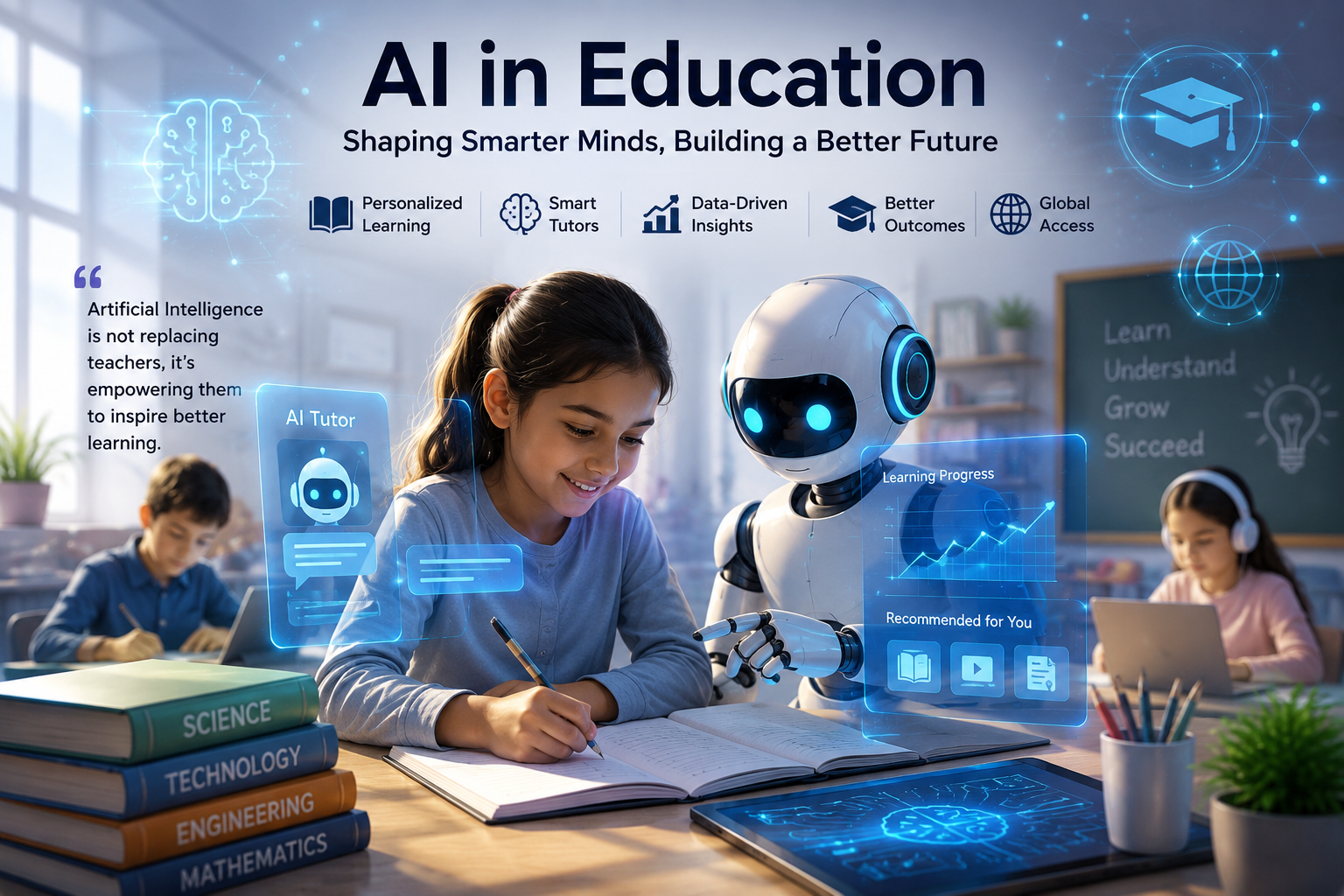
Artificial Intelligence is transforming education by making learning more personalized, interactive, and accessible. Students can now receive instant feedback, practice with intelligent tutoring systems, and learn at their own pace. Teachers are also benefiting because AI helps reduce repetitive tasks such as grading assignments, preparing quizzes, and analyzing student performance. This allows educators to spend more time teaching and mentoring students.
As schools, colleges, and universities continue to embrace digital transformation, AI is becoming an essential part of modern classrooms. It supports both online and offline learning, making education more efficient than ever before.
What Is Artificial Intelligence?
Artificial Intelligence, commonly known as AI, refers to computer systems that can perform tasks requiring human intelligence. These tasks include understanding language, recognizing images, solving problems, making predictions, and learning from data.
Unlike traditional software, AI systems improve over time by analyzing large amounts of information. They identify patterns, make recommendations, and provide intelligent responses based on previous experiences.
In education, AI can understand students' learning habits, identify their strengths and weaknesses, and recommend customized learning materials. This creates a more effective learning environment where every student receives the support they need.
Why AI Is Becoming Important in Education
Education is not the same for every student. Some learners understand concepts quickly, while others require additional practice and guidance. Traditional classrooms often struggle to meet the individual needs of every student.
Artificial Intelligence solves this problem by providing personalized learning experiences. AI-powered educational platforms analyze student performance and recommend lessons that match their skill levels. Students who need extra practice receive additional exercises, while advanced learners can move ahead without waiting for others.
This personalized approach improves confidence, motivation, and academic performance.
Personalized Learning Experience
One of the biggest advantages of AI in education is personalized learning.
Every student has a unique learning style. Some prefer visual content such as videos and images, while others learn better through reading or practical activities. AI identifies these preferences and adapts learning materials accordingly.
Instead of giving every student the same lesson, AI creates customized learning paths based on individual performance. Students can study at their own pace without feeling pressured or left behind.
This flexibility helps learners understand difficult concepts more effectively and improves long-term knowledge retention.
AI-Powered Virtual Tutors
Many students hesitate to ask questions during classroom lessons. Some feel shy, while others may not have enough time to receive personal attention from teachers.
AI-powered virtual tutors solve this challenge by providing instant support 24 hours a day.
Students can ask questions anytime and receive immediate explanations. These virtual assistants can explain mathematical problems, grammar rules, science concepts, and many other subjects in a simple and understandable way.
This continuous support encourages independent learning and increases student confidence.
Smart Content Creation
Artificial Intelligence is also helping teachers create educational content more efficiently.
AI tools can generate quizzes, summaries, lesson plans, worksheets, and practice tests within minutes. Teachers can also create interactive presentations and personalized assignments based on students' learning levels.
Instead of spending hours preparing classroom materials, educators can focus more on teaching and engaging with students.
AI also makes educational content more interactive through animations, simulations, videos, and virtual learning experiences.
Faster and More Accurate Assessment
Grading assignments and exams is often one of the most time-consuming responsibilities for teachers.
AI simplifies this process by automatically evaluating multiple-choice questions, short answers, essays, and even coding assignments in some cases.
The technology provides instant feedback, helping students identify mistakes immediately. Quick feedback allows learners to improve continuously rather than waiting days or weeks for results.
Teachers also gain valuable insights into classroom performance, enabling them to identify topics where students need additional support.
Advertisement
leaderboard · ad unit “article-mid”
Comments (0)
Advertisement
billboard · ad unit “article-bottom”