Digital Education in Pakistan 2026: How AI and New Skills Are Changing Student Learning
Digital education in Pakistan is evolving rapidly in 2026. Discover how AI, online learning and future-ready digital skills are changing education for Pakistani students.
Advertisement
leaderboard · ad unit “article-top”
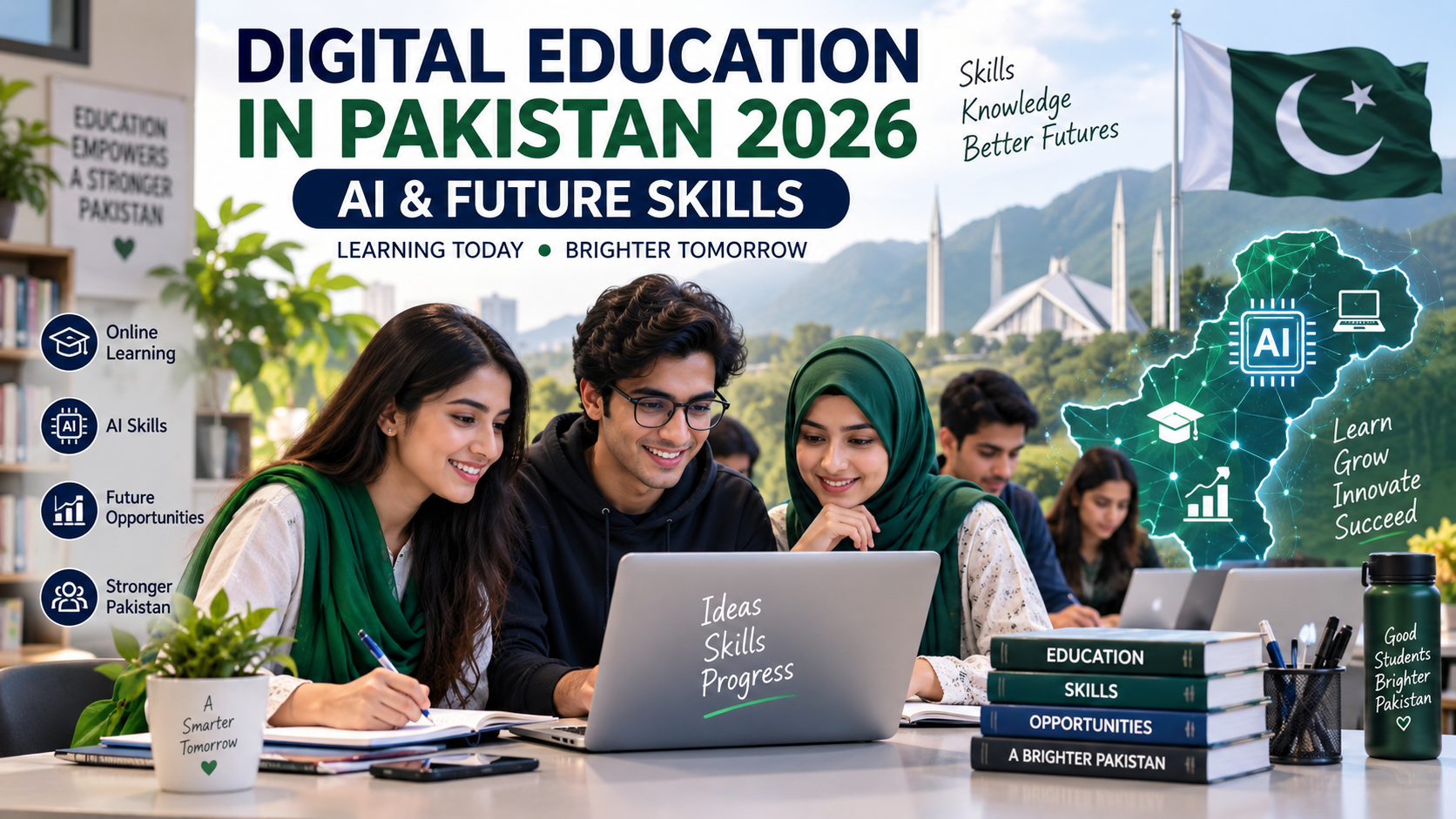
Digital education is becoming increasingly important in Pakistan as students, universities and educational institutions adopt new technologies. In 2026, artificial intelligence, online learning and practical digital skills are playing a growing role in preparing students for future education and employment.
AI Is Becoming Part of Higher Education
Artificial intelligence is becoming more important in higher education. Universities and educational institutions are increasingly focusing on AI, computing and other technology-related skills.
Students can benefit from learning how AI tools work, how to use them responsibly and how these technologies can support research, problem-solving and learning.
Why Digital Skills Matter for Students
Academic qualifications remain important, but practical digital skills can provide students with additional opportunities.
Useful areas include:
- Artificial intelligence
- Data analysis
- Cybersecurity
- Cloud computing
- Software development
- Digital communication
- Online research
Developing these skills alongside regular studies can help students prepare for a rapidly changing job market.
Online Learning Creates New Opportunities
Online learning gives students another way to develop knowledge and professional skills. Digital courses can allow students to learn at their own pace and explore subjects that may not be available in their regular classes.
However, students should use reliable educational platforms and verify important information rather than depending entirely on automated tools.
Combining Education With Practical Skills
One of the most useful approaches for students is to combine academic learning with practical experience. Small projects, internships, online courses and professional certifications can help students apply what they learn.
Communication, problem-solving and critical-thinking skills also remain important, even as technology becomes more advanced.
Challenges of Digital Education in Pakistan
Digital education also faces challenges. Access to reliable internet connections, suitable devices and quality digital resources is not equal for every student.
Improving digital infrastructure and making learning opportunities more accessible can therefore play an important role in expanding the benefits of technology-based education.
What Students Can Do in 2026
Students do not need to learn every new technology at once. They can begin with basic digital literacy, choose skills related to their interests and gradually build practical experience.
AI and digital tools should support learning rather than replace independent thinking, research and creativity.
Conclusion
Digital education is creating new possibilities for Pakistani students. As AI, online learning and technology skills become more common, students who combine academic knowledge with practical and responsible digital skills can be better prepared for future study and employment.
Advertisement
leaderboard · ad unit “article-mid”
Comments (0)
Advertisement
billboard · ad unit “article-bottom”